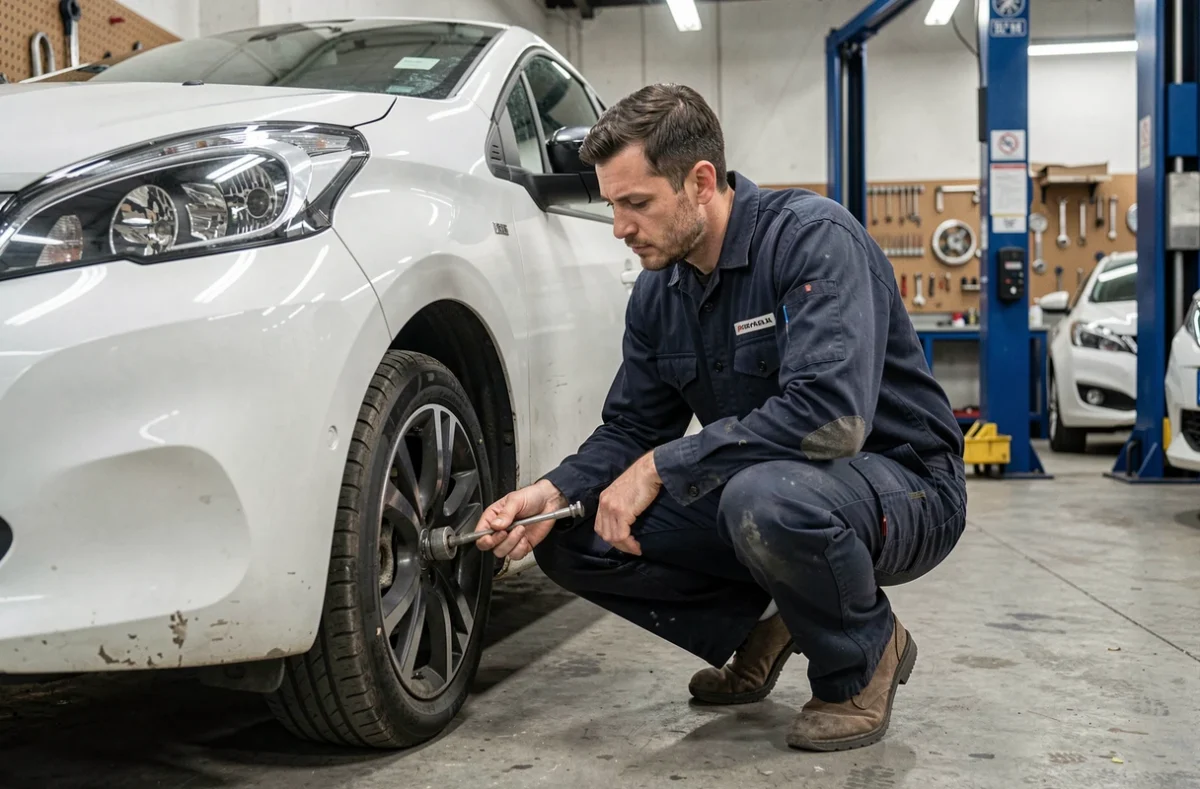
The Peugeot 208 has several years of production with very different engines from one generation to another. Some engine blocks have documented structural defects that have led to manufacturer recall campaigns, while other versions cover the miles without major issues. Precisely identifying the engine type and production date of a specific unit allows for anticipating costly repairs.
Wet belt PureTech: the technical defect to understand first
The 1.2 PureTech engine powers a large portion of the Peugeot 208 sold since 2014. Its technical feature is that it uses a timing belt that operates submerged in engine oil, a design choice intended to reduce noise and friction.
The problem arises when this belt degrades prematurely. The particles released contaminate the lubrication circuit, which can cause the engine to seize. This defect has led to the recall of several hundred thousand vehicles worldwide, including about 200,000 in France.
Since December 2020, the inspection interval for this belt has been reduced from 180,000 km or 10 years to 100,000 km or 6 years. A vehicle maintained according to the old recommendations may therefore have exceeded the revised deadline without the belt being inspected.
When purchasing a used vehicle, checking the maintenance log against these new thresholds radically changes the risk assessment. To learn more on Zone Auto, the list of affected engines and the risky production periods are detailed there.
Stellantis coverage on the PureTech: conditions and limits
Stellantis has implemented a commercial coverage for vehicles affected by the wet belt defect. Since January 2021, some units benefit from full coverage of parts and labor.
This warranty is conditional. It applies to vehicles less than 6 years old or with less than 100,000 km, depending on which limit is reached first. Eligibility is verified based on the VIN and maintenance history, not just the model year displayed in an advertisement.
In practice, a used buyer must request from the seller a written confirmation of the recall status and coverage. A vehicle that has exceeded either of the two thresholds without having received the intervention is out of coverage. Replacing the wet belt along with addressing any potential damage then represents a heavy bill.

Diesel 1.5 BlueHDi and older HDi: distinct weaknesses
The 1.5 BlueHDi block has a documented risk of premature elongation of the camshaft chain, which disrupts the timing. This defect mainly affects units produced before the end of 2022. Symptoms manifest as a knocking noise on cold start and an intermittent check engine light.
On the first generation (2012-2015), the 1.4 HDi and 1.6 HDi diesels suffer from different weaknesses:
- Injectors clog quickly in exclusively urban use, causing jerks and a gradual loss of power
- The EGR valve accumulates soot deposits that reduce airflow and trigger a limp mode
- The turbo may show signs of premature fatigue, with an abnormal whistling followed by a noticeable drop in power
For older diesels, rigorous maintenance (frequent oil changes, cleaning of the EGR valve) reduces the risk but does not eliminate it on high-mileage urban units.
Peugeot e-208 electric: software defects and the onboard charger
The early versions of the e-208 have two specific issues that buyers of used electric vehicles should be aware of.
The first is a defect in the engine control unit that incorrectly interprets an electrical phenomenon as a high-voltage insulation loss. The vehicle then cuts the engine torque while driving, causing a sudden loss of propulsion. This defect is subject to a recall (reference DVSA R/2024/176) corrected by a simple software reprogramming.
The second concerns the onboard charger on certain versions equipped with the 11 kW three-phase charging. Units manufactured by Mahle are reported as likely to fail, preventing any charging of the vehicle. Checking the type of onboard charger before purchase is necessary on an early production e-208.
Checks before purchasing a used e-208
Ask the seller if the reprogramming of the control unit has been performed. In case of doubt, visiting a dealership allows confirming the recall status based on the serial number.
For the charger, testing a full charge (AC current, not just at a DC fast charger) before the transaction reveals any potential silent malfunction.
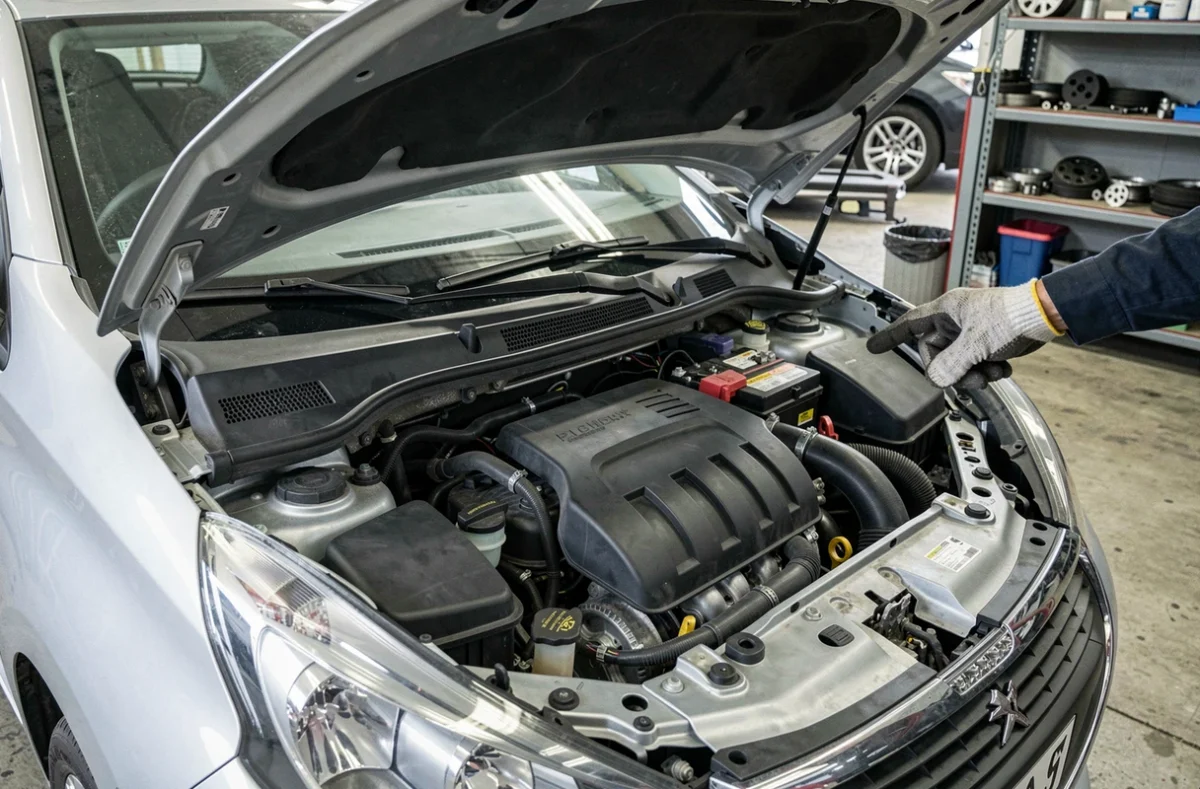
Key checks before buying a used Peugeot 208
Regardless of the type of engine, certain checks systematically apply:
- Record the VIN and check the recall status on the official Stellantis website or with a dealer
- Compare the production date (not the model year) with the identified risky periods for each engine block
- Request the complete maintenance log and verify that the maintenance intervals match the revised recommendations, especially for the PureTech
- For a diesel, ask for details about the vehicle’s usual journeys: exclusively urban use accelerates the clogging of the pollution control system
The production date is the most discriminating information. Two Peugeot 208 of the same model year may have been assembled several months apart, with different components depending on whether the defect correction had already been integrated at the factory.