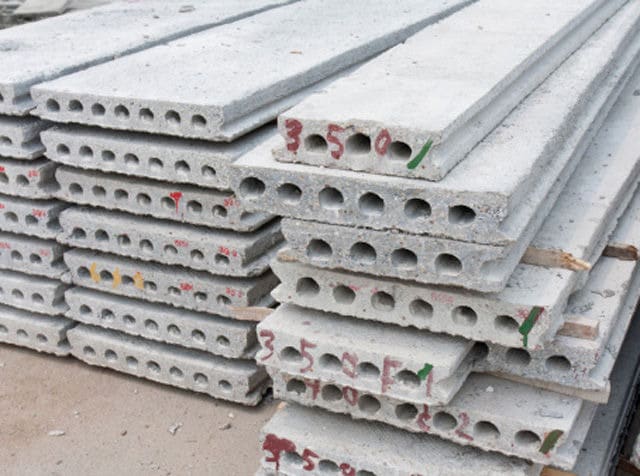
Advantages – It is a robust and stable construction that is very resistant to the elements. – It allows for quick construction. After just seven weeks, the house is airtight and waterproof. — The level of insulation and sealing is excellent, as the entire cladding is produced by one company. Additionally, large elements are used that fit together perfectly. — It offers pleasant comfort inside thanks to unmatched thermal inertia. — The prefabricated concrete parts provide great freedom for interior layout, combined with a large opening to the outside and a relatively significant choice of elements. Concrete. — The casing is simple and elegant without visible beams, bars, and lintels. — The substrate is livable thanks to perfectly sealed and insulated walls. — The technical equipment is free of grooves: circuit breakers and pipes are integrated into the formwork of the prefabricated walls. — The interior design is smooth and elegant, without plastering.
Disadvantages — The construction system lends itself much less to more classic and traditional architecture. — The installation of heavy facade cladding (brick, natural stone, etc.) incurs considerable costs, especially for thicker foundations and window lintels. — Integrating a large amount of technical equipment into the ready-made panels requires you to make decisions at the design stage. Changes during the work are practically impossible without incurring significant costs. — Enthusiasts of eco-friendly architecture appreciate it less, even though concrete is completely recyclable.
( rdm)
Read also: advantages and disadvantages of concrete