Choosing a family craft activity is about more than finding something everyone enjoys. The setup time, cleanup afterward and age gap between participants all determine whether the activity will become a regular pastime or be abandoned after one try. Lack of free time is one of the main barriers to taking part in leisure activities, according to a 2025 leisure survey. Comparing activities against these practical criteria makes it easier to choose one that lasts.
How long a craft session really takes: setup, activity and cleanup
The duration listed for a kit or activity only reflects part of the time involved. Before getting started, you need to take out the supplies, protect the table and prepare the tools. After the session, cleaning up and putting everything away can double the actual time required.
This table compares several popular types of crafts across three criteria that are rarely considered together: setup, activity time and cleanup.
| Activity | Setup | Activity time | Cleanup |
|---|---|---|---|
| Paint by numbers | Minimal (ready-to-use kit) | Long sessions that can be split up | Moderate (drying time, brushes) |
| Jewelry making | Minimal to moderate | Short to moderate | Quick (small pieces to sort) |
| Modeling (clay, dough) | Moderate (surface protection) | Moderate | Long (cleaning, drying) |
| Embroidery / needlepoint | Very little | Short sessions, easy to pick up again | Very quick |
| Creative cooking | Moderate to lengthy | Moderate | Long (dishes, countertops) |
| Puzzles (traditional or 3D) | Very little | Flexible sessions | None if there’s a dedicated space |
Embroidery and puzzles stand out for requiring very little setup or cleanup. They make it easy to fit in a few minutes of activity without taking over the kitchen table for an hour. The activities on the Le Petit Castor website include options like these that fit easily into a busy family routine.
An activity that’s quick to set up and put away is more likely to be repeated, while a project that takes half a day to prepare may end up being a one-off.
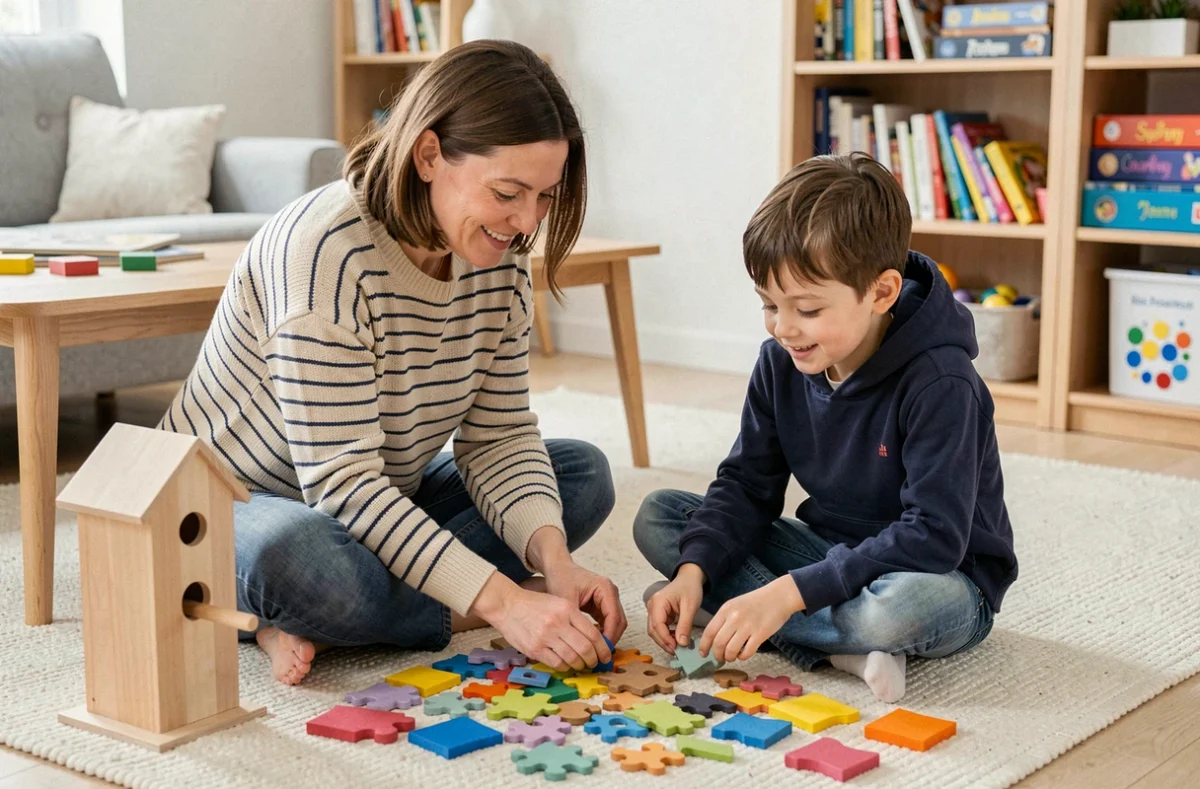
Age gaps between children: divide up the roles instead of making everyone do the same thing
Asking a four-year-old and a preteen to do exactly the same thing can lead to two opposite frustrations: the younger child struggles, while the older one gets bored. The solution is to divide up the roles within a shared project.
For example, a modeling activity could work like this:
- An adult or older child prepares the dough, measures the quantities and handles sharp or hot tools
- A six- to eight-year-old puts the shapes together and chooses the colors
- The youngest child (three to five years old) decorates the finished pieces with safe accessories, such as stamps or stickers
This approach works for most family crafts. When making jewelry, the older child threads the small beads while the younger one works with larger beads. For creative cooking, one child cracks the eggs while another decorates the cake. Assigning roles based on each child’s abilities turns an age gap into an advantage.
Craft kits and minimum age: a safety detail to check
Online kits don’t always display age-related warnings clearly. Small parts (beads, jewelry findings, model components) pose a choking hazard for children under three. Before buying, it’s important to check that the product complies with safety requirements and to confirm the age listed by the manufacturer. This is especially important on marketplaces, where responsibility between the seller and the platform may be unclear.
Craft activities without a kit: try before you invest
A complete paint-by-numbers kit or diamond embroidery set can be costly. If the family hasn’t tried crafting together before, it may make sense to start with activities that don’t require specialized supplies.
- Creative cooking uses ingredients already in the cupboards and makes it possible to enjoy a full activity without buying anything first
- Short writing activities (making up a story together, writing cards) require only paper and pencils
- A group drawing on a large sheet of paper can be done with any markers you have at home
- Cardboard 3D puzzles are inexpensive and offer a way to see how well everyone works together and how patient they are
These activities require no initial investment and help you discover what each family member enjoys. Trying activities before buying a specialized kit helps prevent boxes from being forgotten in a cupboard.

How to choose a family craft activity that lasts
Choosing a craft that works for the whole family involves more than picking something appealing. Several practical factors determine whether an activity becomes a regular habit or a one-off.
How the cost of supplies compares with the number of sessions
A paint-by-numbers kit produces a single finished piece. A needlepoint or embroidery project can keep you busy for several weeks with short sessions. Traditional puzzles can be done again or swapped. The cost per session matters more than the initial purchase price.
Storage space between sessions
Modeling requires space for drying. Painting needs a protected area. Embroidery fits in a pouch. If space is limited, choosing compact activities prevents supplies from becoming clutter and eventually putting you off picking them up again.
How easily the activity can be split into shorter sessions
Families with young children rarely have two-hour blocks of free time. Activities that can be split into 20-minute sessions are the ones that survive busy weeks. Needlepoint, embroidery and puzzles are ideal in this respect. Creative cooking and modeling, which are best finished once started, are better suited to weekends or holidays.
Ultimately, choosing a family craft activity means balancing three practical constraints: the time available for each session, storage space and the age range of the participants. An activity that meets all three criteria has a good chance of making it past the first attempt.