The windows are changing, the news feeds are overflowing with new looks, and yet a handful of underlying movements are truly shaping fashion right now. Rather than listing dozens of fleeting micro-trends, let’s focus on the currents that are permanently altering the way we dress and consume fashion.
Discreet luxury and mid-market: when minimalism goes downmarket
Have you noticed that oversized logos are becoming rarer, even in accessible brands? This shift has a name: quiet luxury. Born in houses like The Row, Loro Piana, or Khaite, this trend is based on impeccable cuts, neutral palettes, and a deliberate absence of visible brand signs.
What has changed recently is that quiet luxury is no longer confined to the ultra-luxury segment. Accessible premium brands and even some capsule lines from fast fashion are adopting the principle: higher quality materials, muted colors, and streamlined silhouettes. Firms like McKinsey and The Business of Fashion are documenting this diffusion into the mid-market.
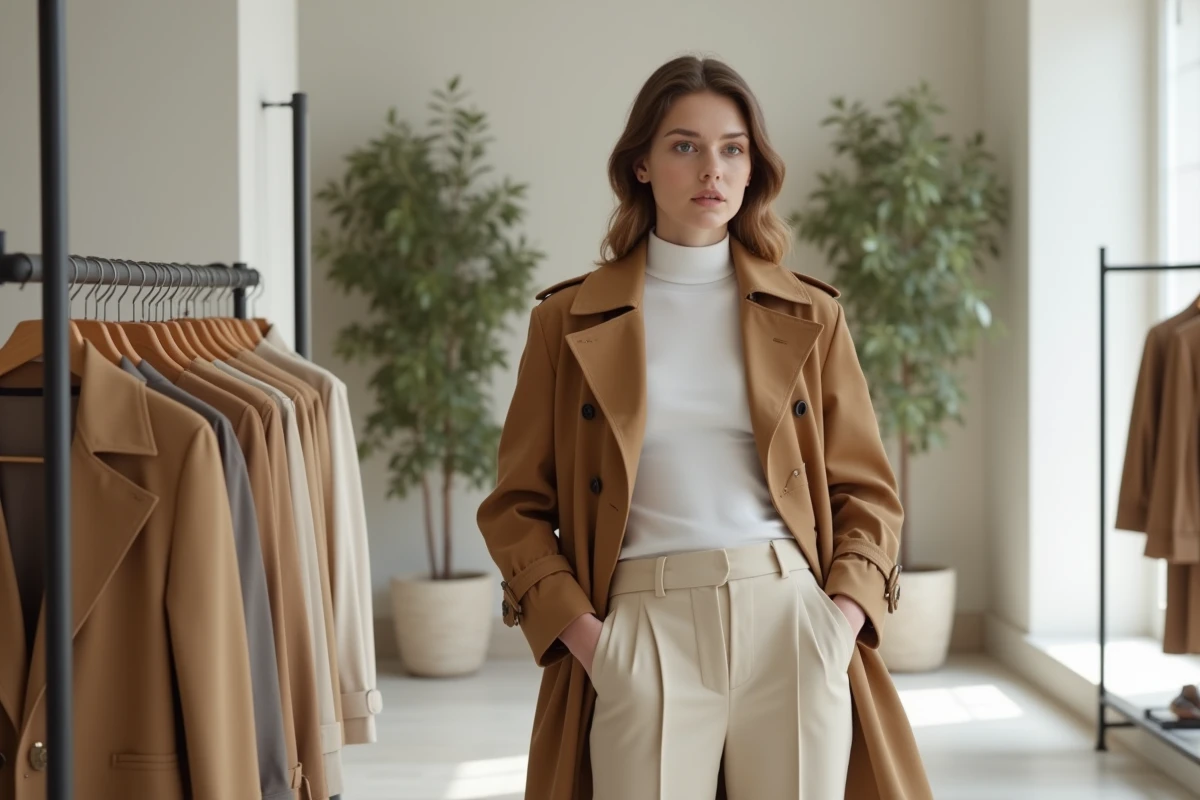
Specifically, this translates into so-called “capsule” wardrobes: about ten coordinated pieces designed to work together effortlessly. A straight wool-blend pant, a plain crew-neck sweater, a slightly oversized blazer. To explore these pieces and style them according to your taste, Boulevard Mode’s fashion universe brings together selections that follow this coherent wardrobe logic.
The trap would be to confuse minimalism with blandness. A discreet wardrobe works when the cut and material replace the logo as a style marker. A poorly draping fabric or an approximate cut becomes more noticeable without embellishments to divert the eye.
Artificial intelligence and fashion: virtual fitting, tailored recommendations
For several seasons now, several major platforms (Zalando, H&M, Gucci among others) have been rolling out artificial intelligence tools directly integrated into the shopping experience. We are no longer talking about lab prototypes: these features are in production, with A/B testing to measure their impact.
Three concrete uses stand out:
- Personalized look recommendations that analyze the user’s style and sometimes their actual wardrobe to suggest complete outfits rather than isolated products.
- Generating outfit images from a simple descriptive text, allowing visualization of an idea before searching for the corresponding pieces.
- Virtual fitting on an avatar or photo, coupled with a fit prediction that estimates how the garment will look on your body type.
Virtual fitting bridges the gap between the screen and the fitting room. For the consumer, the benefits are twofold: reducing returns (and their logistical impact) and gaining confidence when finalizing a cart. For brands, it’s a measurable conversion lever.
The point to watch remains the reliability of the rendering. An overly smoothed avatar or an approximate size prediction can create disappointment stronger than a simple blind purchase. The tool is only valuable if it accurately reflects your silhouette.
Colors and key pieces of spring: what is really worn
Each season brings its share of “trendy” colors. This spring, a few shades stand out in collections and on the streets.
Warm palettes and butter tones
Butter yellow emerges as the defining color of the spring season. It is a soft, almost creamy yellow that works well on both a light sweater and a midi dress. Its strength: it pairs with neutrals (white, beige, navy) without creating an aggressive contrast.
Earthy colors remain present, driven by the minimalist wave. Beige, featured in straight pants or a short trench coat, serves as a base for outfits that focus on texture rather than hue.
Oversized cuts and barrel jeans
The oversized sweater continues its rise, worn half-tucked into high-waisted pants or loose over a midi skirt. The barrel cut of jeans (wide at the thighs, tapered at the ankle) is gaining ground as an alternative to slim fits. These loose silhouettes contribute to the same movement of embraced comfort that has been sweeping through fashion for several seasons.
Sustainable fashion and consumption choices: going beyond greenwashing
Sustainability in fashion is no longer a niche marketing argument, but vague promises are still abundant. Have you ever seen an “eco-friendly” label without any details on what that actually means?
Three concrete criteria distinguish a real commitment from mere posturing:
- Traceability of the raw material, from the field or factory to the finished product, with verifiable certifications (GOTS for organic cotton, OEKO-TEX for the absence of harmful substances).
- Transparency about manufacturing conditions, ideally with the name and location of the workshop.
- The physical durability of the garment: fabric weight, seam strength, wash resistance. A “durable” garment that pills after three washes is only durable in theory.
Investing in pieces designed to last several seasons aligns with the logic of the capsule wardrobe mentioned earlier. Buying less but better remains the most effective advice, even if it is less spectacular than a new colorful trend.
Current fashion trends converge towards a productive paradox: on one hand, technology accelerates access to styles and facilitates choices; on the other hand, dominant taste leans towards sobriety, textile quality, and the longevity of pieces. The two movements do not oppose each other; they complement each other. A well-calibrated virtual fitting tool can indeed help buy the right piece on the first try, the one that will remain in the wardrobe well beyond a season.