
An anniversary in ten days, a budget of around twenty euros, and a teenager who already spends her evenings stringing beads on a nylon thread salvaged from a drawer: this is the concrete starting point. Giving a DIY bracelet kit is betting on an activity that lasts well beyond the unboxing. However, it is essential to choose the right set, one that won’t end up at the back of a shelf after three identical bracelets.
Beads, threads, charms: what a lasting kit really contains
You open the box and find bags of beads, one or two clasps, a roll of elastic thread, and an instruction manual. The problem is that many kits stop there. Three sessions later, the stock is depleted, and the teenager moves on to something else.
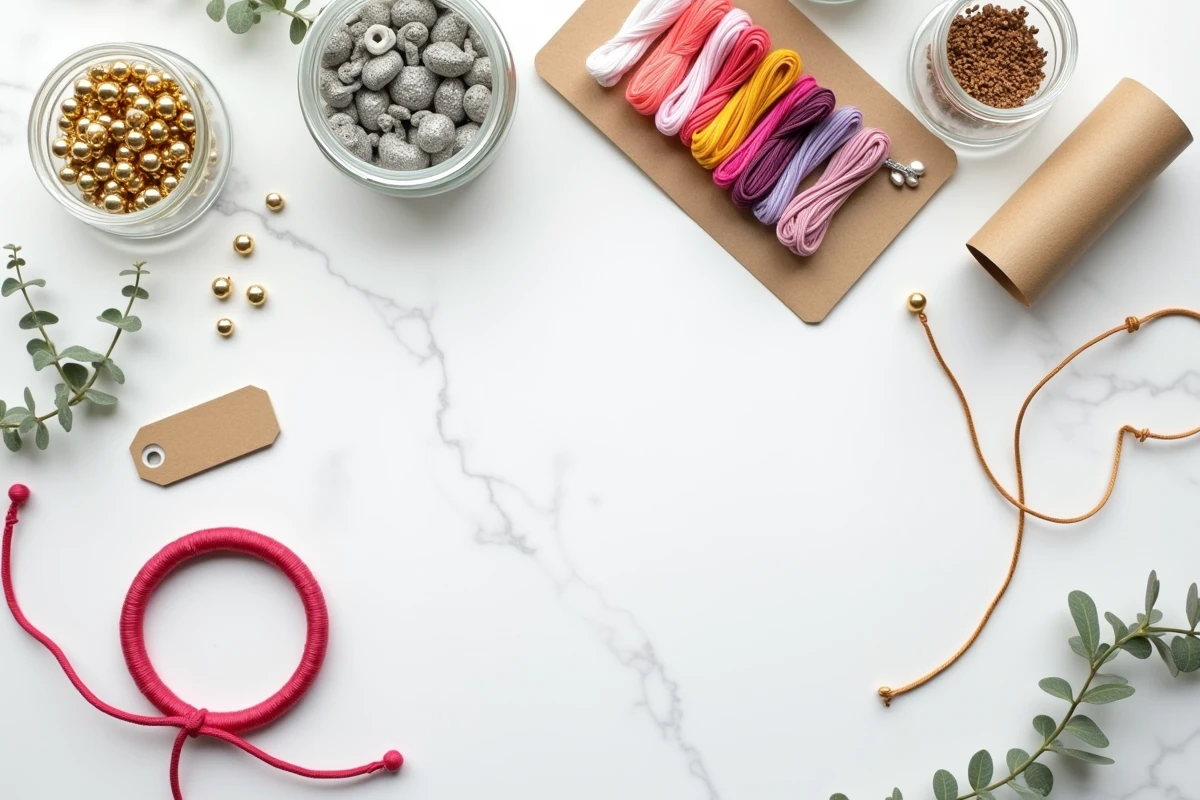
Durable kits share a common point: a sufficient variety of materials to renew creations. We’re talking about glass beads, stainless steel charms, cotton cords, letter beads, and clasps of different sizes. This diversity allows for the creation of friendship bracelets, charm bangles, or braided designs without needing to buy more supplies.
Brands like Cultura or PicWicToys have also strengthened their ranges of creative kits for teen bracelets specifically labeled for ages 10-14, after noticing that kits labeled for ages 6-9 were consistently rejected by older kids, and that adult jewelry kits seemed too technical or too expensive.
Teen bracelet kit: the selection criteria that make a difference
You can compare two kits at the same price and end up with radically different experiences. Here’s what to check before buying.
- The number of possible techniques: a good kit allows for at least braiding, bead stringing, and charm assembly. A kit limited to a single technique gets boring quickly.
- The quality of clasps and fasteners: metal clasps that open easily prevent frustration. Thin plastic versions often break on the first use.
- The presence of a clear visual guide: step-by-step photo instructions work better than tiny diagrams that are poorly translated.
- The possibility of restocking: some brands sell compatible refills of beads or threads. This is a real plus for extending the activity without having to buy an entire new kit.
Feedback varies on the issue of integrated storage: some kits with rigid compartments make sorting easier, while other teens prefer to dump everything into their own box. It’s not a decisive criterion, but it’s worth considering if you know the person’s habits.
Responsible DIY bracelet kit: a concrete selling point for parents
Since the implementation of the AGEC law in France and European recommendations on single-use plastics, kits highlighting materials perceived as more responsible are gaining ground. Glass beads instead of plastic, organic cotton cords, recyclable packaging: these elements are increasingly appearing in teen gift aisles.
Recent consumer panels indicate that this “responsible” aspect influences parents’ purchasing decisions, not necessarily the teens themselves. When buying a creative gift, parents also want it to align with family values. It’s an effective sorting criterion when hesitating between two similarly priced kits.
Lifestyle brands and matching mini-kits
Brands like Claire’s or Bijou Brigitte have recently launched mini-kits for charm bracelets modeled after their finished jewelry collections. The idea is to allow the teen to create bracelets that match the models sold in stores. This hybrid positioning between finished product and DIY works well for teens who want a “clean” result without going through a lengthy learning phase.
DIY gift idea for teens: beyond the standard kit
Giving a kit isn’t just about placing a box on the table. The way you present the gift changes the perception.
Adding a notebook of models printed from Pinterest or a small stock of bulk beads purchased from a specialized supplier transforms a generic kit into a personalized gift. You can also slip in a pre-made bracelet as a model to replicate or deconstruct.
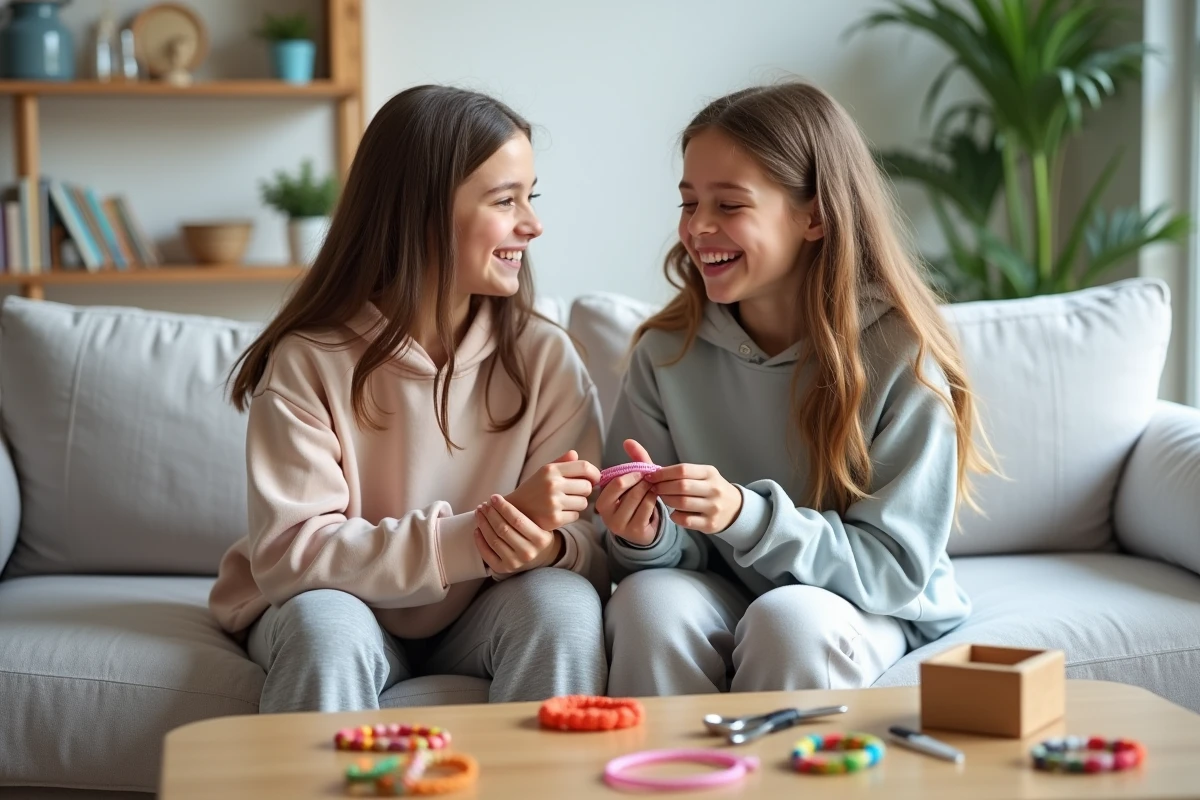
A shared workshop remains the best accelerator: proposing a creative afternoon with two or three friends gives the kit a social dimension that the teen might not have initiated alone. Some cities even offer guided workshops for making bead bracelets, like in Nancy, for those who prefer a structured setting.
Creative subscription box: an alternative to the single kit
Some brands offer monthly creative hobby boxes that regularly include bracelet supplies. The advantage: the teen receives new materials every month without having to choose. The downside: the cumulative cost far exceeds that of a one-time kit, and the content doesn’t always match the teen’s specific tastes.
For a birthday or Christmas gift, a well-chosen single kit remains the most suitable format. The box makes sense when you already know that the teen regularly engages in the activity and is looking for novelty.
The right creative bracelet kit is one that matches the teen’s tastes, offers enough materials for more than ten creations, and doesn’t require a jewelry-making diploma to use. It’s better to have a kit with varied and sturdy components than a large box filled with identical plastic beads.