
Fitness encompasses a variety of practices, from strength training to cardio and stretching. Measuring its real effects on daily life requires going beyond generic promises and looking at what public health data documents. What parameters does fitness actually modify, and from what volume of activity do the benefits become measurable?
Sedentary Lifestyle and Active Breaks: What Fitness Doesn’t Always Replace
Competitors rarely address a point that public health policies now emphasize: interrupting long periods of sitting is just as important as workout sessions. A person who trains three times a week but sits for eight hours straight each day maintains a sedentary profile for a large part of their day.
The current trend is no longer limited to recommending “doing sports.” It targets reducing sedentary time through regular micro-breaks: getting up for a few minutes, walking, doing stretches. These interruptions complement the work done in the gym or at home.
By exploring fitness on the Va Y Avoir Du Sport website, we see that programs increasingly integrate this logic of frequent movements, beyond just the planned session.
For people working from home, the issue is even more pronounced: the lack of movement between offices, meeting rooms, or transport eliminates natural opportunities to move. Structured fitness compensates for part of this deficit, but active breaks remain a complementary lever that sports practice alone does not cover.

Effects of Fitness on Stress, Sleep, and Concentration: Comparative Table
Rather than listing benefits in bulk, a cross-examination of three key parameters allows us to situate the impact of fitness according to the intensity of practice.
| Parameter | Light Activity (walking, stretching) | Moderate Activity (strength training, gentle cardio) | Intense Activity (HIIT, intense weight training) |
|---|---|---|---|
| Stress | Perceptible reduction, linked to breathing and posture change | Significant decrease due to hormonal regulation post-effort | Marked short-term effect, but risk of accumulated fatigue if recovery is insufficient |
| Sleep | Improvement in falling asleep | Better overall sleep quality | Benefit conditioned by timing (effort too late can disrupt sleep) |
| Concentration | Modest gain, especially after an active break | Notable improvement for several hours after effort | Peak concentration post-session, followed by a phase of fatigue |
This table highlights a often overlooked point: the appropriate intensity depends on the primary objective. Seeking to improve sleep does not require the same type of session as aiming for increased concentration at work.
Adapted Physical Activity and Sport-Health Houses: A Still Unknown System
Fitness is not reserved for already athletic individuals. Adapted physical activity (APA) is taking an increasing role in care pathways in France. Sport-Health Houses serve as a link between health professionals and sports educators, allowing individuals distanced from practice to start in a supervised setting.
This system is particularly aimed at people suffering from chronic conditions, seniors, or those who have never practiced sports. The support is personalized: a sports educator adapts exercises to the participant’s capabilities, in connection with the treating physician.
The National Sport-Health Strategy 2025-2030 explicitly targets inequalities in access to sports practice. The goal is to reach audiences who do not feel concerned by traditional fitness, by offering accessible formats regardless of age or level.
September Move: A National Mobilization Launched in 2026
France launched the “September Move” operation in September 2026, a month dedicated to physical and sports activity. This initiative is part of the National Sport-Health Strategy and aims to make practice accessible throughout the territory.
The goal is not to turn every participant into an athlete, but to demonstrate that moderate daily physical activity produces measurable effects on well-being. The projects deployed on the ground prioritize collective action over simple individual advice.
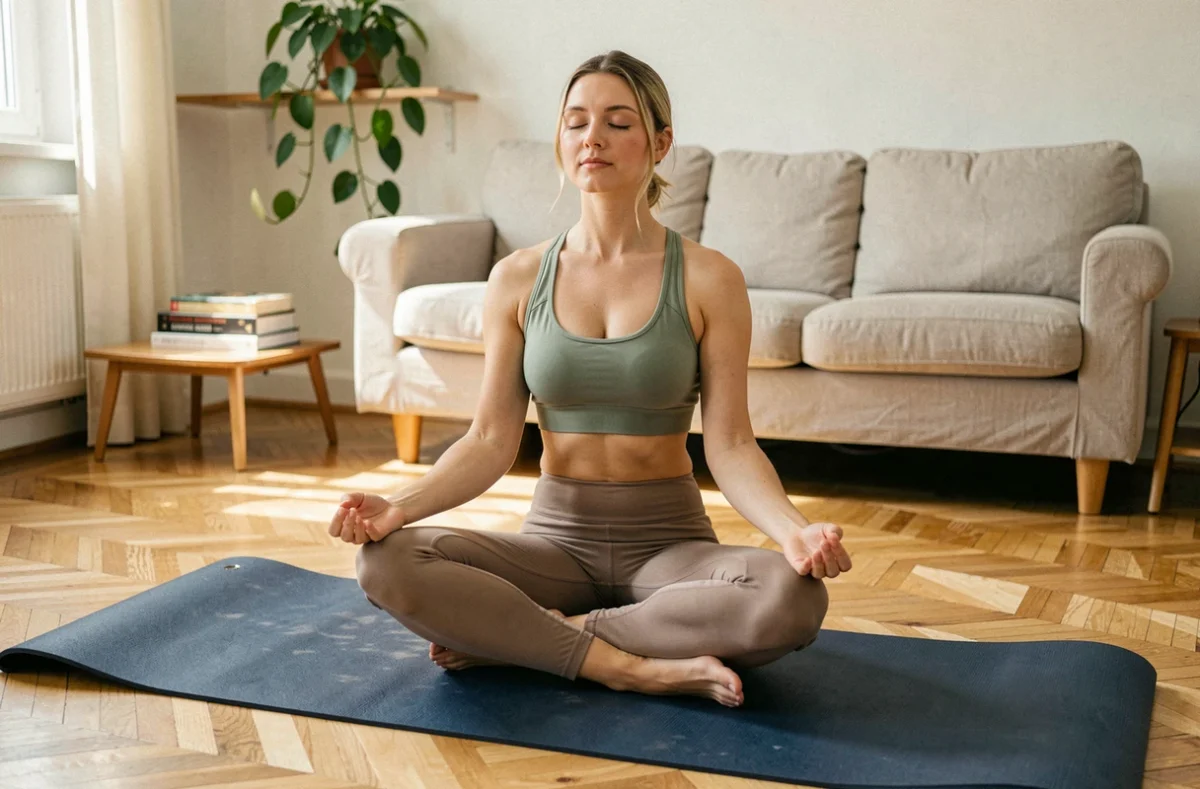
Daily Fitness: The Parameters That Make a Difference
Beyond the choice of discipline, several variables determine whether fitness truly transforms daily life or remains an effort without perceptible return.
- Regularity takes precedence over intensity: moderate sessions practiced several times a week produce more lasting benefits than intense but sporadic training
- The timing of the session influences sleep and concentration: sustained effort at the end of the day can delay falling asleep, while a morning session improves alertness in the first half of the day
- Nutrition and recovery condition the results: without appropriate nutritional intake and sufficient rest, the body does not fully benefit from the effort made
- Breathing during exercise plays a direct role in stress management: practices that incorporate breathing work (yoga, Pilates, certain strength circuits) combine physical and mental benefits
These parameters explain why two people practicing the same volume of fitness can achieve very different results. The context surrounding the session matters as much as the session itself.
What Public Recommendations Confirm About the Minimal Volume
The recommendations highlighted by the Ministry of Health remind us that the benefits do not depend on intensive training. Moderate, regular practice, combined with reducing sedentary time, is sufficient to produce improvements in stress, sleep, and daily energy.
Fitness, in its diverse formats, offers a concrete lever to achieve this minimal volume. Strength training, cardio, stretching, or mixed circuits: each format contributes differently to health parameters. The most relevant choice remains the one that can be sustainably integrated into the schedule, not the one that promises the most spectacular results on paper.