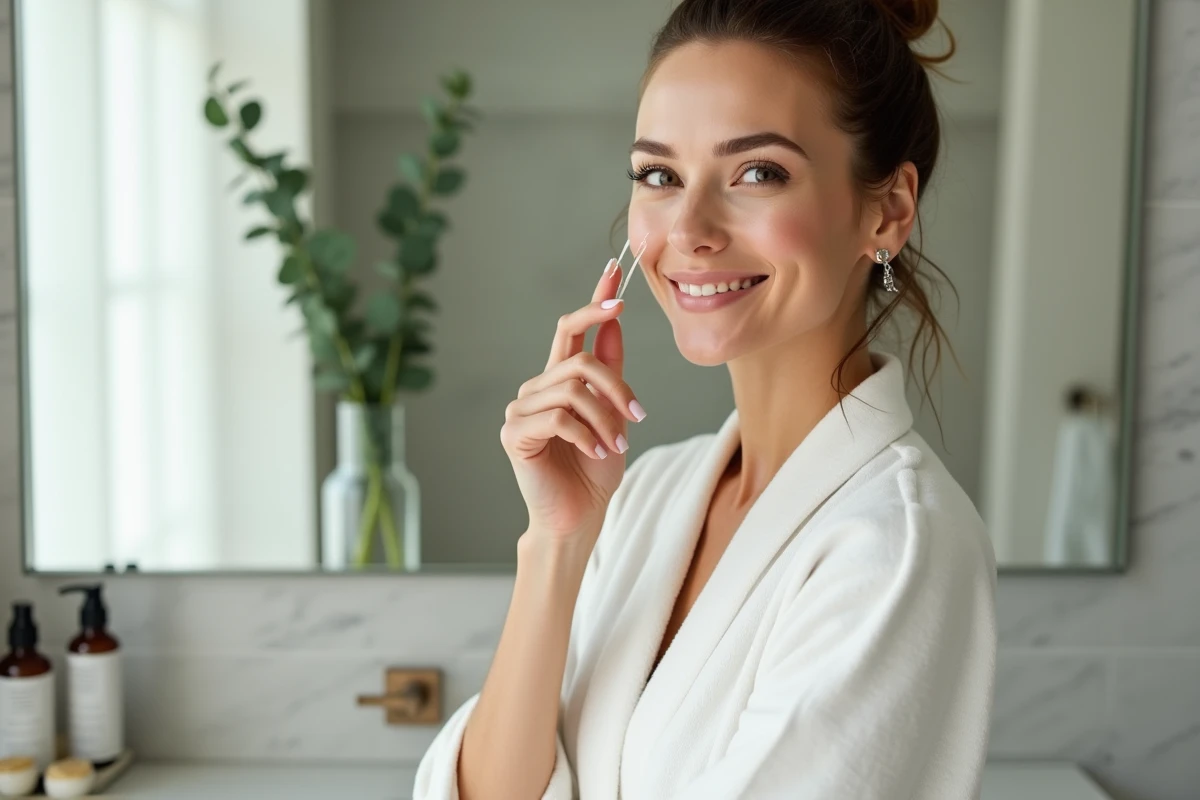
Your skin feels tight after cleansing, your foundation emphasizes pores by noon, and you feel like you’re piling on products without visible results. These signals often point to a routine problem, not a skin issue. Recent beauty trends suggest rethinking the very logic of daily skincare, focusing on precise actions and textures that truly work.
Skinimalism: Reducing Your Beauty Routine for Better Results
Have you noticed that your skin reacts better on vacation when you use fewer products? This observation has a name in the cosmetic world: skinimalism. The principle is based on a simple idea: fewer layers, more visible results.
In practical terms, this means moving from a seven or eight-step routine to three or four targeted actions. A gentle cleanser, an active serum suited to your main need, a moisturizer, and sun protection. The rest (toner, essence, ampoule, mist) only makes sense if your skin truly demands it.
This approach doesn’t mean buying cheaper products. It encourages investing in treatments with concentrated formulas and documented active ingredients. A niacinamide-based serum, for example, can alone reduce the appearance of pores, calm redness, and even out skin tone. There’s no need to add three other products for the same functions.
Specialized resources detail these approaches and their variations according to skin types, notably on https://www.blogbeaute.fr/, which regularly compiles developments in facial care and makeup.
Hybrid Makeup and Skincare: What New Formulas Change
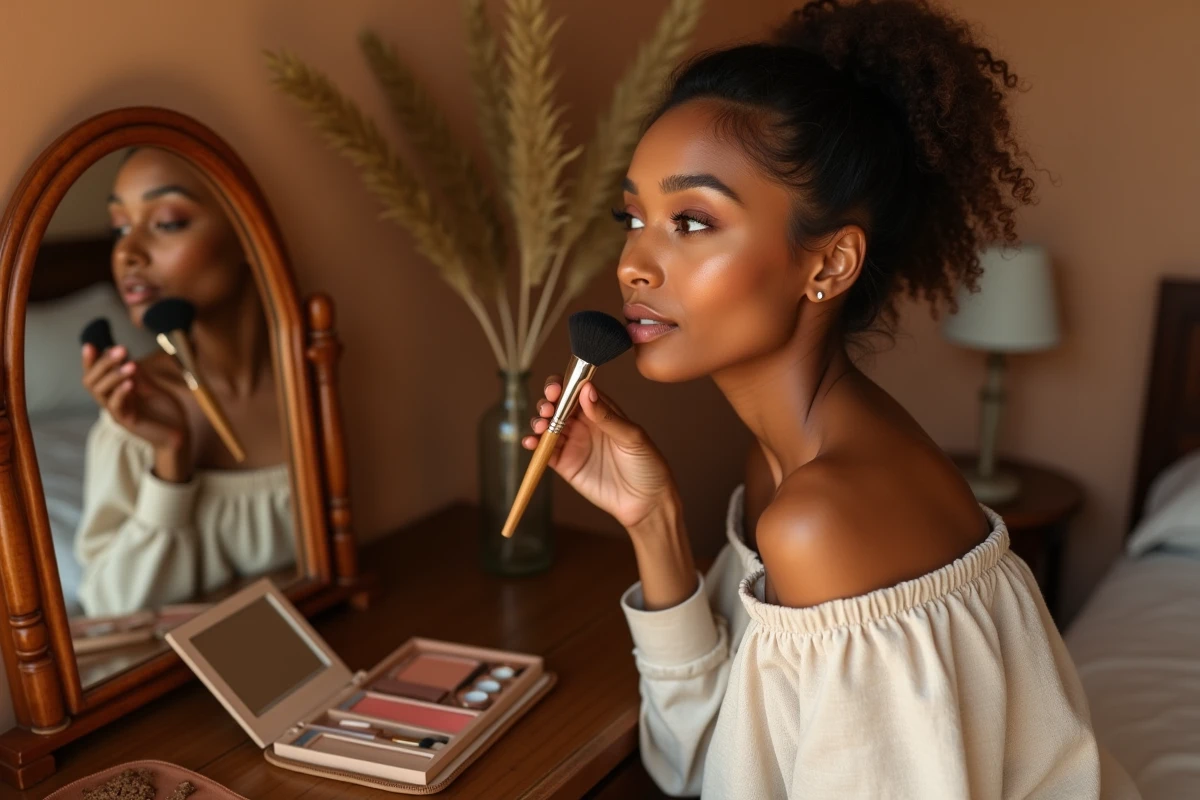
Makeup, long considered an aesthetic veil, is transforming into a skincare vehicle. Hybrid treatments represent one of the most concrete evolutions of recent seasons. The concept: a makeup product that contains active ingredients usually reserved for serums or creams.
Take a common case. You apply foundation in the morning. With a hybrid formula, this foundation contains hyaluronic acid or squalane. Your skin receives a dose of hydration throughout the day, without an extra step. The same logic applies to tinted lip balms enriched with peptides, or mascaras that incorporate strengthening active ingredients for lashes.
What to Check Before Buying
- The concentration of the highlighted active ingredient: a foundation that mentions hyaluronic acid at the end of the INCI list will not have the same effect as a dedicated serum. The order in the INCI list indicates the actual proportion
- The compatibility with your existing routine: a hybrid treatment replaces a step, it does not add to it. If you keep your serum under an already active foundation, you risk overloading your skin
- The wear of the makeup: some formulas enriched with hydrating actives may not hold well on oily skin. Test for half a day before adopting the product for daily use
A good hybrid treatment simplifies the routine instead of complicating it. If you have to add a setting spray and powder to compensate, the gain is null.
Social Media Beauty Trend: How to Sort Viral Actions from Real Advice
Social media accelerates the spread of beauty trends like no magazine ever has. A close-up filmed action, replicated by thousands of users in a few days, can place a product or technique at the top of searches.
This virality poses a sorting problem. Content that accumulates millions of views does not guarantee that the action is suitable for your skin. “Slugging” (applying a thick layer of petroleum jelly at night) works on very dry skin but can cause breakouts on combination or acne-prone skin. The popularity of a beauty action does not replace the analysis of your own skin.
Three Filters Before Reproducing a Viral Trend
Ask yourself these questions when faced with a beauty tip seen online:
- Does the creator show the result after several weeks of use, or just the immediate effect? Oily textures give an instant “glow” in video that says nothing about the skin’s condition in the medium term
- Does the highlighted product contain an active ingredient you can identify? If the video mentions neither ingredient nor skin type, the advice remains too generic to be useful
- Does your current routine allow for this additional action? Adding a product without removing the one it replaces amounts to piling on, exactly what skinimalism seeks to avoid
Personalized Routine According to Skin Condition: Adapting Your Care Daily
Recommendations by skin type (dry, oily, combination, sensitive) remain a useful starting point. Recent approaches go further by taking into account the skin’s condition at a given moment.
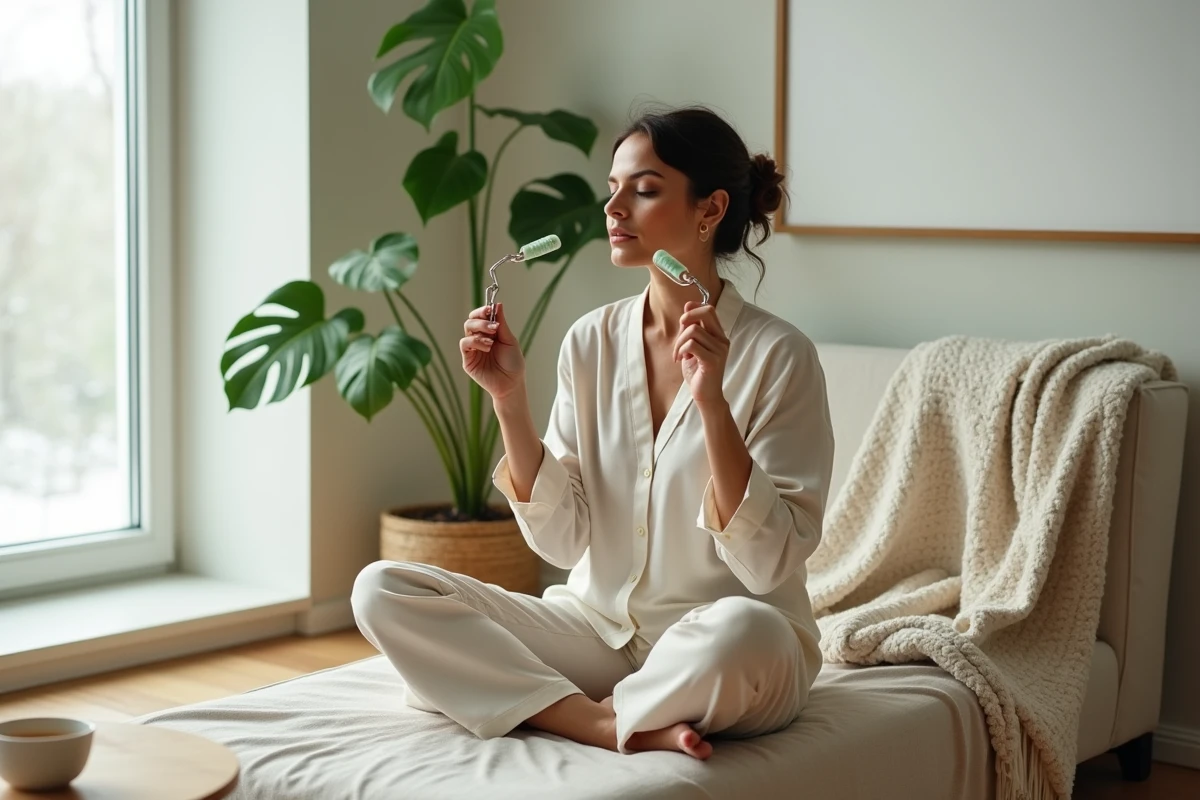
Your skin does not have the same needs in winter and summer, nor on Monday morning after a tiring weekend and Wednesday evening after a calm day. Adapting your facial care day by day yields better results than a fixed routine applied mechanically.
An example: you use a chemical exfoliant twice a week. If your skin shows signs of irritation (redness, tightness, sensitivity to touch), spacing applications to once a week for a few days is often enough to restore comfort. Conversely, a period of high sebum production may justify temporarily adding a mattifying treatment targeted at the T-zone.
This logic of listening to the skin aligns with the sensory dimension that brands now incorporate into their formulas. Textures are designed to provide immediate tactile feedback: a serum that absorbs in seconds, a cream that leaves a finish that is neither sticky nor greasy. The pleasure of application becomes a formulation criterion, not a secondary marketing argument.
The best beauty routine is not the one that follows the most trends. It is the one that contains the fewest products possible, each chosen to meet an identified need on your skin, not on that of a content creator.