
When choosing your mug to sip your favorite drink, whether it’s a refreshing morning coffee or a soothing evening tea, you might not think about its volume. However, the size of your mug can affect your tasting experience. From classic mugs to travel cups and designer models, the capacities vary significantly. This diversity can influence the temperature of your drink, how long it stays hot, and how many times you need to get up to refill it. Understanding these differences is essential for making the choice that best suits your daily needs.
Mug Volumes: A Practical Guide to Choosing the Right Capacity
The capacity of a mug is a key criterion for the user. Small-sized mugs, holding between 80 and 250 ml, are perfect for those who enjoy their espresso or ristretto; they are not distinguished by remarkable capacity but by their convenience. In contrast, medium-sized mugs, ranging from 250 to 350 ml, represent the standard format, catering to the average amount of tea or coffee consumed by a person.
Fans of generous drinks will find happiness with large-sized mugs, exceeding 350 ml. These large containers are ideal for a hearty breakfast or for long breaks requiring a substantial snack. The wide range of mugs available on the market offers flexibility regarding volume, allowing everyone to choose according to their specific needs.
Choosing a mug is not just about personal preference for design or color; the size of the mug directly influences the tasting experience. Consider how often you prefer to refill your cup and the importance of keeping your drink at the ideal temperature. The capacity of your mug should match your liquid consumption routine, whether it’s a light afternoon tea or a robust coffee to start the day.
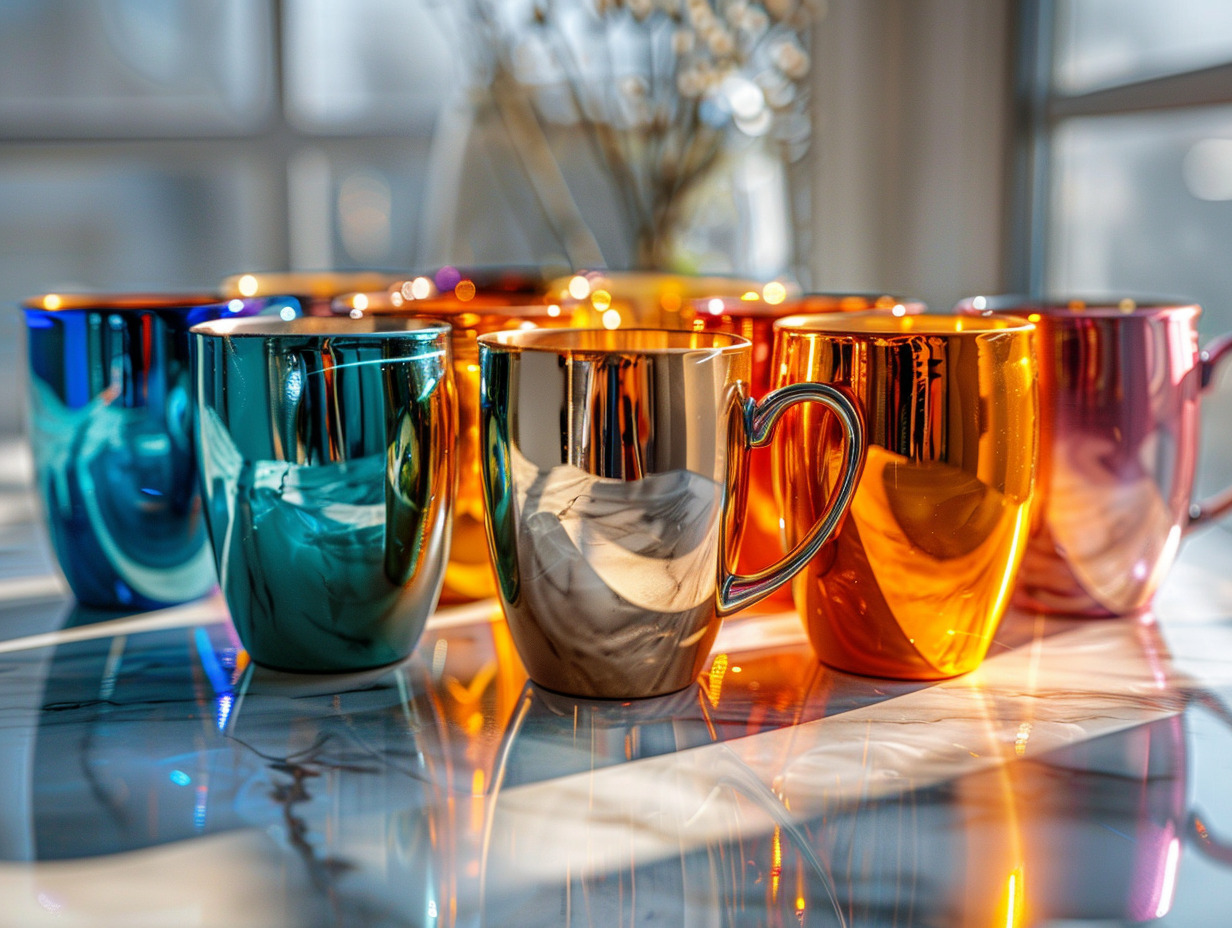
Impact of Volume on Mug Use: Aesthetics, Functionality, and Comfort
The choice of a mug’s capacity is not limited to practical considerations. It is also a matter of aesthetics and comfort. Promotional mugs, for example, leverage their surface to convey messages and images, favoring larger models that can prominently display logos and slogans in a visible and impactful way. These versatile accessories, available in various sizes, have become preferred vehicles for corporate communication.
The functionality of mugs is also influenced by the material used. Ceramic, often chosen for its ability to be customized at a low cost, works well for medium-sized models, which remain manageable while offering satisfactory durability. For large mugs, stainless steel is preferred for its strength and longevity, essential qualities for outdoor activities where the risk of impacts is higher.
Consider porcelain, a delicate material often selected for its brilliant finish, promoting elegant designs and high-end products. Porcelain mugs are generally medium-sized, balancing the need for a comfortable grip with the inherent fragility of this noble material. In contrast, plastic, lightweight and drop-resistant, is ideal for small-sized mugs intended for children’s use, ensuring safety and ease of handling.
Alternative materials like glass, which offers optimal preservation of drink flavors, and cork, valued for its eco-friendly and non-slip properties, diversify the mug offerings. PLA, a bioplastic derived from corn starch, aligns with sustainable development and is frequently used for takeaway mugs, combining ecological awareness with convenience. These materials, while less common, can be found in mugs of all sizes and adapt to various uses, from morning coffee to on-the-go beverages.